


Website Copywriting
Written by the person who builds the site
The words on your website do most of the selling. They tell a customer what you do, whether you do it where they live, and why they should call you instead of the next result. As a website copywriter, I write those words for small businesses, from what I learn about your business and from the searches your customers make, and I write them as part of the same project in which I plan, design, and build the site.
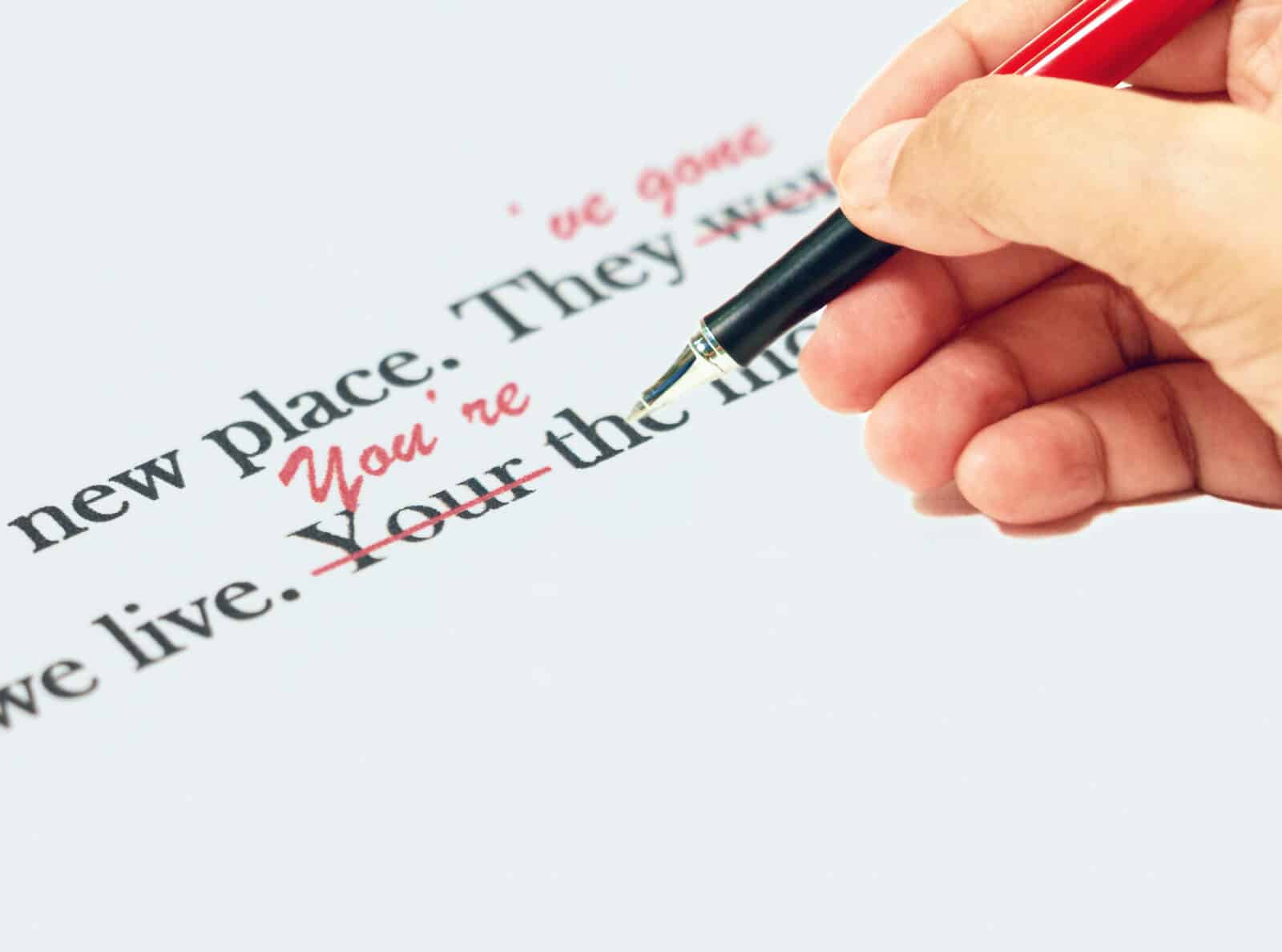
Why the words matter more than the design
The design earns a glance. The words earn the call.
A visitor gives a website a few seconds. In that time they read, or skim, and decide whether to stay. The design earns a glance. The words earn the call.
Most websites that fail to bring in work fail here. The design is fine. The words say “Welcome to our website” and “We offer a wide range of services,” and the visitor leaves without learning what the business does, for whom, or where. Google reads the same words and comes away just as unsure, so the page shows up for nothing.
We offer a wide range of services to meet all of your needs.
Learn moreFour questions, in order
Good website copy answers the visitor's questions in the order they ask them. What is this? Is it for me? Can I trust it? What do I do next? A page that answers those four questions, in words the reader would use themselves, does its job whether it's a homepage or a page about gutter cleaning.
The words set the design
It also sets the design. A page with real content gives the design something to arrange. A design made first, with the words poured in later, ends up with headings that fit the boxes instead of the reader. So on a website project, I write the words first, and the design gets built around them.
How I write your website content
I write the draft. Your job is to check it.
I don’t ask you to write your pages. Owners who could tell a customer everything about their business in five minutes on the phone will put off writing it down for months, and the website waits. So the writing is my job, and your job is to check it.
It starts with discovery
The first call and discovery are the research. Discovery is a set of questions you answer at your own pace, while I do research of my own. I ask what you do, who hires you, what they ask on the phone, what they worry about, and what makes them choose you over the business down the road. I ask what your customers call your services, because that's often not what you call them. I read the sites your customers compare you to. Your answers, in your own words, are where the copy starts. By the time I write, I know your business well enough to write as if I were you.
The content sheet
The content sheet is one document that holds every word the site will say, page by page, including the headings, the paragraphs, the button labels, the questions and answers. I fill it in before you see it. You read it the way you'd read a draft from a colleague. You fix what's wrong, add what only you know, and mark anything that doesn't sound like you.
Editing a draft is faster than writing one. A page that would take you a weekend to start takes you twenty minutes to correct. If I need more from you, the questions come in one list, and you answer them when you have a moment.
In your voice
The site should sound like the person a customer meets when they call. A one-man electrical shop and a three-attorney law firm don't talk the same way, and their websites shouldn't either. I listen for how you describe your work on the call, keep the phrases you use with customers, and leave out the ones your trade uses only with itself. When you read the draft and a line sounds like a brochure, say so. That's what the review is for.
Rather not write it yourself?
Tell me about your business"Josh built a new website for our construction company from scratch. We had previously dabbled with a few other web designers, but no one came close to giving us the personalized touch and care that Josh showed us through this process. Josh is a great designer and has a good feel for what's 'the latest and greatest,' but what impressed me the most was the interest he took in understanding our company values and how he was able to portray that on our website! I would recommend him to anyone looking to build a website and will be using him in the future."
Everyday words, on purpose
A stranger in a hurry should understand every sentence.
I write website copy by one rule. A stranger in a hurry, reading on a phone, should understand every sentence the first time. That rules out most of what fills business websites.
No filler
"We are committed to providing quality service" tells the reader nothing they didn't assume. The sentence comes out, and a fact goes in, like the year you started, the towns you cover, the kind of job you do most.
Short words, one idea
"Start" instead of "commence." "Help" instead of "facilitate." A sentence with one idea in it. A reader on a phone gets each sentence the first time, and never has to go back and work out what it meant.
Specifics over claims
"Experienced" is a claim. "Replacing furnaces in Jefferson County since 2009" is a fact a reader can picture and Google can match to a search. Any business can make the claim. Only yours has the fact.
Your customer's words
If customers say "bathroom remodel" and you say "bath renovation," the page says bathroom remodel. Trade terms stay where customers use them, with a short explanation the first time they appear.
One job per page
A page about deck building talks about decks. The patios get their own page. Each page can then answer one search fully, and a visitor finds the part they came for without digging through the rest.
The writing on my own site follows the same rule, and so does this page. If a sentence here made you stop and reread it, I'd want to know.
SEO copywriting: copy and search, written together
The words and the search plan are the same decision.
Search engine optimization, or SEO, is the work that helps a page show up when someone searches for what it covers. On most websites, the copy gets written first and the SEO gets added later by someone else, who changes a few headings and adds some keywords. The result reads like it was written for a machine, and it usually was.
Full bathroom remodels, from the first plan to the last tile. See recent projects and request a quote.
I write the copy and plan the search at the same time, because they're the same decision. Before a page is written, I know which searches it should show up for and which questions those searchers are asking. Then the page answers them, in order, in the searcher's words. The heading says what the page is about. The first paragraph answers the main question. The questions at the bottom cover the follow-ups. Nothing is stuffed in for Google that a reader wouldn't want anyway.
Your Business remodels bathrooms across Jefferson County. Its site lists the towns it serves and answers common questions about timing.
yourbusiness.comThe same copy does one more job now. AI tools like ChatGPT and Google's AI answers build their recommendations from pages that state plainly what a business does, where, and for whom. A page written for a hurried human reader is the page those tools can quote.
What my website copywriting services include
Everything a page needs to work, well beyond the paragraphs.
When I write a site, the words include everything a page needs to work, well beyond the paragraphs a visitor reads.
The copy for every page
Headings, paragraphs, lists, button labels, and the short lines under forms and photos. Every word a visitor reads, from the top of the homepage to the message after a form is sent.
A page title and summary
For each page, the two lines Google shows in its results, written so a searcher knows the page has what they want before they click, and picks it over the other results around it.
alt="A new furnace installed in a Golden basement"Image descriptions
A short line for every photo, called alt text, read by people using screen readers and by search engines. It says what the photo shows, so the picture counts for something, too.
Questions and answers
The questions your customers ask, answered on the page they belong to, so the page helps the reader and shows up when people ask Google or an AI tool the very same thing.
The structure
Which page says what, so no two pages compete for the same search and no question goes unanswered. I settle it along with the site plan, well before the first page is written.
- hours are 7 to 6
- add Arvada
- say "tune-up"
Your edits
You read the whole draft and send me your corrections. I work every one of them in before the words go on the site, and you see the finished pages on a test site first.
On a website project, all of this is part of the build. The price of the site includes the words.
Copywriting is also available on its own, for a business whose site works and whose words don’t. I write the new pages to fit the site you have, and whoever looks after the site puts them in, or I do. If the site’s structure is the real problem, I’ll say so on the call, because new words on the wrong pages won’t fix it.
Need the words for your site?
Tell me about itWhere AI fits in the writing
The tools help with the rough work. The decisions are mine.
I use AI tools in the writing, and I’ll tell you how. They turn the call notes and your discovery answers into a rough first pass, they check a finished draft for a sentence that runs long or a term I forgot to explain, and they help me find the questions customers ask about a service. What they don’t do is decide what your site says. The plan, the facts, the voice, and every sentence that goes to you come from me, and every claim on the page comes from you. A reader can’t tell which tool a sentence started in. They can tell when nobody was paying attention, and someone always is.
- rough first pass
- long-sentence check
- customer questions
- the plan
- the facts
- the voice
- every sentence
Writing in practice
Two sites, each written for the people who use it.

Love and Beauty Maui
Wedding hair and makeup · Kihei, Maui
A wedding hair and makeup studio on Maui. Couples search for the booking they need, so each kind of booking got its own page, written for the person searching for that, like weddings, elopements, photo shoots, mobile hair and makeup, and the salon in Kihei. The common questions were answered on the pages and marked up so Google and AI tools could read them. Inquiries are up 51 percent on the year before launch.
+51%Inquiries versus the year before launchRead the case study
Therm-A-Guard
Electric utility products
A company that makes mesh wildlife guards for electric utility equipment. The pages had to work for an engineer checking specifications, a lineman installing the guard, and a purchasing agent placing the order. Each page was written for the reader it serves, from the material the owners already had, including their calls, their questionnaire answers, and the answers they give buyers every week. Technical terms stayed where those readers use them. "Hot stick installable" means a guard goes on with a lineman's insulated pole while the equipment is live, and the site says so in those words, because that is how a field supervisor searches. An FAQ page answers twenty of the questions buyers used to call about.
2.7xSample requests and orders since year oneRead the Therm-A-Guard case study"Josh possesses a rare blend of technical expertise, design flair, copywriting talent and business savvy. Josh took the time to understand our business, identified the best approach to communicate with our customers, and developed a website that is delivering results."
Questions about website copywriting
Still have a question?
Ask me directlyWhat is website copywriting?
Website copywriting is writing the words on a website so they tell visitors what a business does, who it's for, and why to get in touch, and so the pages show up in search. It covers every heading, paragraph, and button, plus page titles, the summaries Google shows, and image descriptions. I write website copy as part of the same project in which I plan, design, and build the site.
What is SEO copywriting?
SEO copywriting is writing web pages that answer what people search for, in the words they use, so the pages rank in search and still read well to a person. Before a page is written, I know which searches it should show up for and which questions those searchers ask. Then the page answers them, in order, in the searcher's words.
What's the difference between SEO copywriting and regular copywriting?
SEO copywriting is written to rank for specific searches and answer them, while regular copywriting is written to persuade a reader who's already on the page. Good website copy does both at once. On most sites, the copy gets written first and someone adds keywords later, and it reads like it was written for a machine. I write the copy and plan the search at the same time, because they're the same decision.
What does an SEO copywriter do?
An SEO copywriter researches what customers search for, plans which page answers each search, and writes those pages so they rank and persuade. That includes the headings, page titles, the summaries Google shows, image descriptions, and the questions and answers on each page. Because I also build the site, the words and the layout are planned together, so the design gives every page room for what it has to say.
How much does website copywriting cost?
On a website project, website copywriting costs nothing extra, because the words are part of the site. On its own, the price depends on how many pages need writing, how much research the topics take, and whether the pages need titles, image descriptions, and questions written along with them. The Start a project form asks for your budget range, and we talk it through on our call.
Do I have to write my own content?
No, you don't have to write your own content. I write every page, from our call, your discovery answers, and what I learn about your business. You read the draft, correct the facts, and tell me where it doesn't sound like you. Most owners spend less time on the review than they expected to spend on the first paragraph.
How do you learn my business well enough to write about it?
I learn your business well enough to write about it from you and from your customers, through discovery. Our call and your answers to my questions cover what you do, who hires you, what they ask, and what sets you apart. Meanwhile, I look at how people search for what you sell and read the sites they compare you to. By the end, I know your business well enough to write as if I were you.
Will it sound like me?
Your website copy should sound like your business talking to a customer, and you decide whether it does. I keep the phrases you use on the call, cut the ones your trade uses only with itself, and write at the level of formality your customers expect. If a line reads like a brochure, mark it, and I'll rewrite it.
Do you use AI to write the copy?
AI tools help me with a rough first pass and with checking a finished draft, but the plan, the facts, the voice, and every sentence you receive come from me. They also help me find the questions customers ask about a service. Every claim on the page comes from you. The part of this page on AI says exactly what the tools do and don't do.
Can you rewrite my existing website?
Yes, I can rewrite your existing website if the site's structure is sound. I read every page, keep what works, and rewrite the rest to answer your customers' questions and match the searches they make. New pages are written for services that don't have one. If the site needs new pages and a new structure to hold them, that's a redesign, and I'll tell you on our call.
How long does the writing take?
On a website project, the writing happens before the design starts, while the site plan is fresh, and you review the draft. The timeline we set on our call covers the writing along with everything else. The biggest variable is how quickly the content sheet comes back with your corrections.

Get the words right.
Tell me what your business does, who your customers are, and what your current site says about you, if it has one. Include the address. I’ll read it and write back to set up a short call. If we’re a good fit, I’ll walk you through how we get started. From there, I lead you through a simple process, and you come out with words you’re proud to put on your site. The writing starts with the form.