Start a project
Industries · Startups

Web Design for Startups

A first website that's ready to grow

A new business has no reviews, no history, and not much money to spend. Its website has to do a lot anyway. It has to explain something new, earn the trust of people who have never heard of you, and grow as the business does. I’ve built first websites for founders since 2011, and one of those companies went on to raise $3.3 million. Another was bought. I’ll help you start with what you need now, built so it can grow without being torn down.

Startup website design for Relief Rover: the first site, built in 2018: "We Make It Easy to Find Relief Work"
a founder's first site, 2018
$3.3MRaised by a startup I built for
100+Websites launched
50+Industries I've built for
1.2M+Visits in 2025 to sites I built
The first site

What a startup's first website has to do

Explain something new, earn trust, and make the next step easy.

An established business has a reputation to lean on. A startup has its website. In the first few seconds, a stranger decides whether you’re real, whether you’re for them, and whether to take the next step. A first site has three jobs.

Your homepage
Small-group retreats, planned for youSee the trips
1Pick a trip
2Book it
3Travel

Explain something new

If you're doing something new, nobody is searching for it by name yet. The site has to say what it is in one plain sentence, who it's for, and why it's better than what people do now. That sentence is harder to write than it looks, and it's the first thing I work on with you, before any design.

Why trust you
★★★★★
★★★★★
Works on a phone

Earn trust with no track record

You don't have years of reviews yet, so the site carries the trust. That comes from a clear, careful design, real photos, your story, the people behind the business, and a first quote or two as soon as you have them. A site that looks thrown together tells a visitor the business might be too.

Next step
Name
Email
What are you looking for?
Join the launch list
Request received

Turn interest into a next step

Every visitor should know what to do next, whether to book, buy, call, ask for a sample, or join a list for launch day. Early on, every one of those people matters. The site makes the step easy on a phone, and the request reaches you right away, with everything you need to reply the same day.

The honest case

Why a startup should pay for its website

A first site pays for itself by being the proof a new business lacks.

Money is tight in the first year, and a website builder costs a few dollars a month. So it’s fair to ask why you’d pay a person to build your site. Here’s the honest case:

1

It's the first thing people check

Investors, partners, and first customers look you up before they reply, and the site is often the first thing they see. When Muirelle Montecalvo started Vacayou, she told me she needed the site "so I can go out for funding."

2

A builder gives you tools, not a plan

It can't decide what to say, who the site is for, or which searches it should show up for. Cindy Trice tried a website builder before she came to me. It couldn't create profiles for her members, so that site never went live.

3

Your time is the scarcest thing you have

Weeks spent learning a builder are weeks you're not selling, building the product, or talking to customers. In the first year, those are the weeks that decide whether the business makes it.

4

Rushed sites get rebuilt

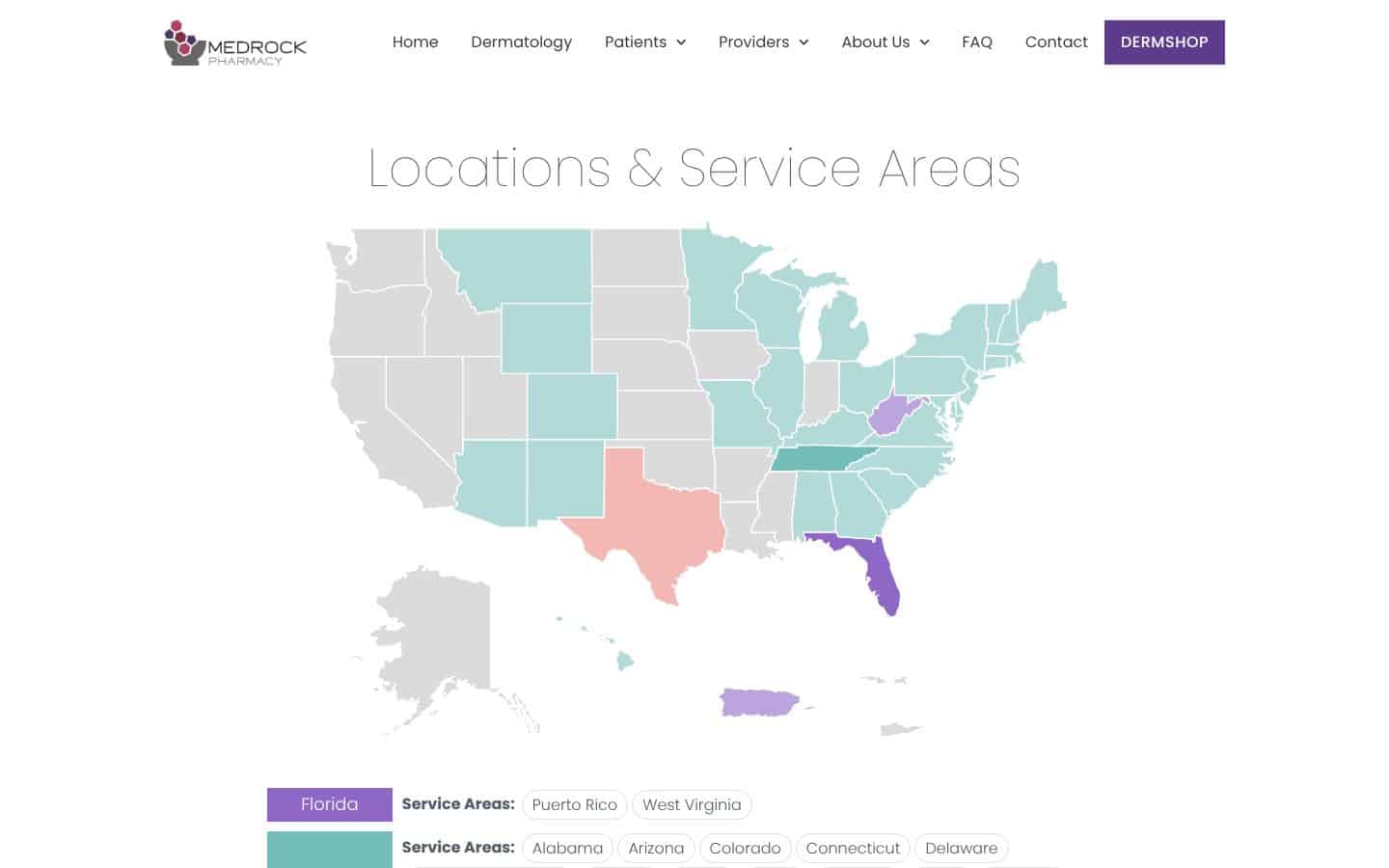
A site thrown together for launch usually gets torn down within a year or two. A site planned to grow just adds pages. Medrock Pharmacy went from one pharmacy to three on the same site, without starting over.

5

Search should start on day one

Search takes time. A page written for the right search can start earning its place in Google the day it goes live. A site with no plan behind it starts over later, and loses the months it could have been climbing.

the honest answer

If your budget really is zero, a website builder is the honest answer, and I'll tell you so. When you're ready for a site that does the work, the plan starts here.

Weighing a builder against a designer?

Ask me
Start small

Start with what you need now.

Build what you need now, on a plan with room for what comes next.

You don’t need a 30-page website on launch day. You need the pages that do the first jobs, built on a plan that has room for everything that comes after. So a startup project usually grows in steps:

How a first site growslaunch day1Join the listas it takes shape2HomeYour productAboutContactlater3HomeYour productAboutContactNew serviceNew locationone plan, no rebuildHow a first site grows1launch dayJoin the list2as it takes shapeHomeYour productAboutContact3laterHomeYour productAboutContactNew serviceNew locationone plan, no rebuild
1

One strong page. A one-page site or landing page that explains the business, shows why to trust it, and makes the next step easy. For many new businesses, it's the right start.

2

The core pages. As the business takes shape, you add a page for each thing you sell, an about page with your story, and a way to get in touch, all on the design you launched with.

3

Room to grow. New services, new locations, new audiences, each one a new page on the same plan, with the same design. No rebuild, and nothing you paid for gets thrown away.

You start with what the business needs now, and the next step builds on the last one instead of starting over.

Landing pages and one-page sites

Have one page in mind?

Tell me about it
Your brand

A brand from day one

A logo and a site designed together match from the first day.

Most founders need a logo too. When the logo and the website are designed together, they match from the start, and every choice gets made once, like the colors, the type, the tone. That saves money now and saves a rebrand later.

Startup website design for Ecosense: the first site, launched in 2015, with the new logo at the top
one green, one blue, picked once
Decontamination company · Working together since 2015

Ecosense

Ecosense was a new company in 2015. In its first year, I designed its logo, its website, and its print pieces, and it's still a client today.


Startup website design for Medrock Pharmacy: the homepage, built with the logo in 2020
same logo, three pharmacies later
Compounding pharmacy · Working together since 2020

Medrock Pharmacy

Medrock Pharmacy's logo and website were built together in 2020, and they carried the brand from one pharmacy to three, with no rebrand along the way.
Where I started

My first website was for a startup with no money.

I know the math a founder does on every dollar.

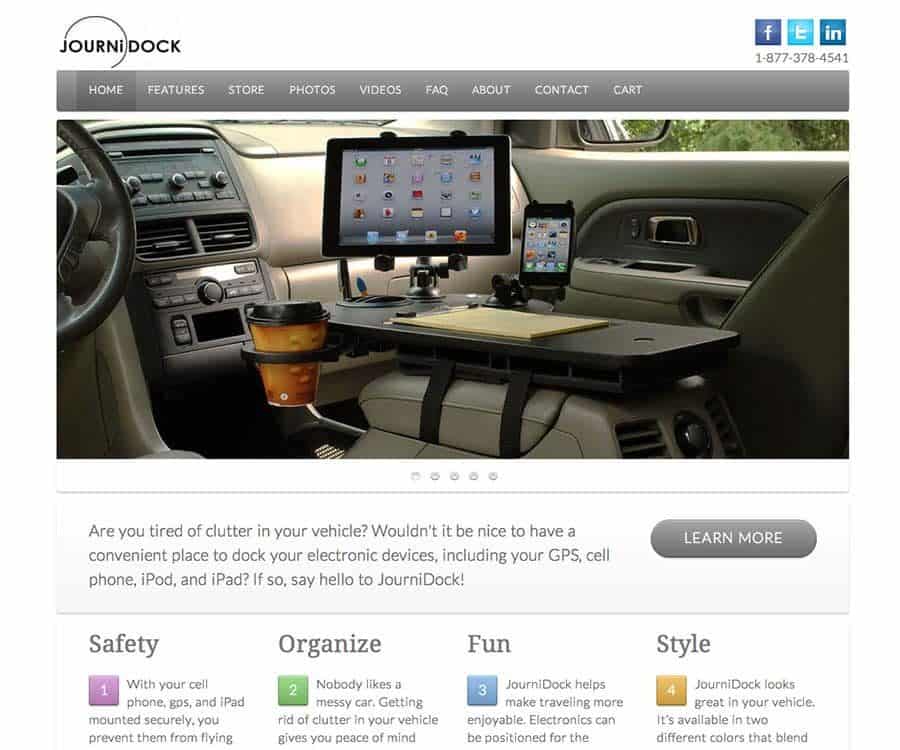
My first website was for JourniDock, a startup I was part of in 2011. The company had a product, no funding, and no money for a web designer, so I built the site myself and learned every part of it. I know the math a founder does on every dollar. That’s why I plan a first site to do the most important jobs first, and to grow without being torn down.

JourniDock.comthe website, 2011HomeFeaturesStorePhotosVideosFAQAboutContactthese firstbudget: $0so I build it myself
where my first site started
Startup website design for JourniDock, my first website, with a car dock holding a tablet and a phone
the site it became
Launch stories

Startups whose first websites I built

They started with an idea and a first website.

These companies started with an idea and a first website. What they did next is their own story, and it’s a good one.

Josh delivered an amazing product on time and on budget.

"As a brand new solo entrepreneur with an idea and a little stack of cash to see it to fruition, I stumbled upon Josh via a web search. Google did me a big favor by putting Joshua Paul Design [my original studio name] on the first page.

I was immediately drawn to the beautiful design and friendly vibe of his site. Josh delivered an amazing product on time and on budget. Now I have a gorgeous, welcoming website.

Josh has continued to help me grow and offered invaluable advice on the business, customer experience, and ideas for the future. All I can say is WOW. And thanks Josh."

Startup website design for Relief Rover: the homepage, with a mountain sunset and buttons to find a job or a relief vet Cindy TriceFounder, Relief Rover
Read the case study
Search

Built to be found from the first page

The first pages matter more when a site is new.

A new website has no history with Google, so it takes time to rank. That makes the first pages matter more, not less. Each one is planned for a search your customers make, and the details that help Google and AI tools understand a new business go in from the start:

A page for each thing you sell

One page per service or product, each written for the searches people use to find it.

Titles and descriptions I write myself

The words people see in Google, written to earn the click from someone ready to buy.

Structured data from day one

Code that tells search engines and AI tools what your business is, what it offers, and where.

A Google Business Profile, if you serve an area

Available when you need it, matched to the site, so you can show up on the map near your customers.

Small business SEO

After launch

After launch, I stay on.

The person who built your site grows it with you.

A startup changes fast. Prices change, services change, and the first customers teach you what the site should have said. On a care plan, the person who built your site keeps it updated, backed up, and secure. When you're ready for the next step, it builds on what's there.

Questions about web design for startups

Still have a question?

Ask me directly
How do you design a startup website?

To design a startup website, say what you do and who it's for in one plain sentence, build the pages that do the first jobs, and add a clear next step. Plan the full site up front, so new pages fit later without a rebuild. A new business has no reviews yet, so the site shows proof another way, through the founders, the first customers, or early press.

What makes the best web design for a startup?

The best web design for a startup explains something new in one sentence, earns trust without reviews, loads fast on a phone, and grows page by page without a rebuild. Vacayou, a wellness travel startup, launched on a first site I built in 2018 and went on to raise $3.3 million. The portfolio has the other launch stories.

Does a startup need a website?

A startup needs a website because investors, partners, and first customers look you up before they reply, and with no reviews or history yet, the site is the proof a new business lacks. It's also how strangers find you once you have something to sell. A first site doesn't have to be big. It has to say clearly what you do and make the next step easy.

What is the difference between web design and software development?

Web design is planning and building the website that explains your business and brings in customers, while software development is building the product itself, such as an app or a software platform. Many startups need both, and the website usually comes first. I do the website. The product is a job for a software developer.

Will AI replace web designers?

AI can now draft pages and layouts, but it doesn't replace a web designer for a business website, because someone still has to plan the site around your customers and check every fact. For a startup on a tight budget, an AI builder is a fair place to start, as long as you know what it leaves out, which is the plan, the words, and the search work.

How much does a startup website cost?

The cost of a startup website depends on what the site has to do on launch day. A one-page site costs less than a full website and can grow into one later. I don't post prices, because two startups rarely need the same thing. We talk through the cost on our call.

Should I just use a website builder?

You should use a website builder if your budget is zero, and I'll tell you so. A builder gives you tools. It doesn't give you a plan, the words, or a design built around your customers, and many builder sites get rebuilt once the business grows. When you want a site that does the work from the start, that's what I build.

Do you build websites for free, or for equity?

No, I don't build websites for free or for equity. I build every website for a fee, and I don't take a share of the company in place of payment. A paid project is one I can give my full attention, and keep looking after for years.

Can we start with one page and add more later?

Yes, you can start with one page and add more later, and for many startups that's the right way to start. I plan the full site first, build the pages you need now, and add the rest as the business grows, on the same design.

Can you design my logo too?

Yes, I can design your logo too. Designing the logo and the website together saves time and money, and it means they match from the first day. Ecosense was a new company in 2015. In its first year, I designed its logo, its website, and its print pieces, and it's still a client today.

I don't have my content written yet. Is that a problem?

Not having your content written yet isn't a problem. I write the words for every page, built from a short call and from discovery, where you answer my questions in writing at your own pace. You check the facts and tell me where it doesn't sound like you.

Do you work with startups outside Colorado?

Yes, I work with startups outside Colorado. I've worked with founders in Florida, Ohio, and across the country. Every project runs on a short call, discovery done in writing, and a draft you edit when it suits you. Where you're located doesn't matter, because the work happens online.

Josh Miller, startup website designer
Get in touch

Start your first website.

Tell me what you’re building, who it’s for, and what the site has to do first. I read every request myself and reply to set up a short call.